
The Future is Now: A Glimpse into AI in Testing
You've been doing an amazing job navigating through the foundational concepts of testing, from the SDLC to Agile and DevOps! It's clear that the world of software development is always evolving, always pushing for better, faster, and smarter ways to build quality products.
Now, let's take a moment to peek over the horizon at one of the most talked-about transformations underway: the role of Artificial Intelligence in software testing. This isn't about sci-fi robots taking over (not yet, anyway! 😉), but about how intelligent systems are beginning to assist and augment the work of testers like us.
This lesson is a "glimpse," an awareness piece to spark your curiosity about what's emerging. You don't need to become an AI expert overnight, but knowing the trends will help you understand the future landscape.
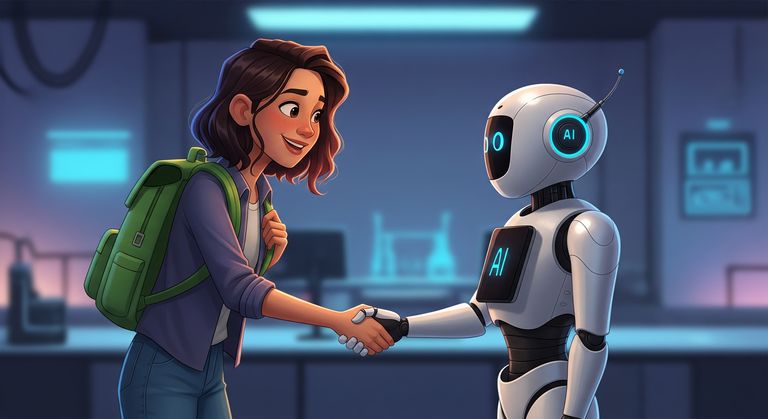
AI and Testing – What's the Big Deal
First off, let's demystify some terms. When we talk about Artificial Intelligence in this context, we're generally referring to computer systems that can perform tasks that typically require human intelligence – things like learning, problem-solving, decision-making, and pattern recognition. A major subset of AI is Machine Learning (ML), where systems are trained on large amounts of data to learn patterns and make predictions or decisions without being explicitly programmed for every single scenario.
So, why is this a big deal for software testing? Well, modern software is incredibly complex. The number of features, user interactions, data combinations, and environments can be overwhelming. Testing thoroughly and quickly is a massive challenge. AI and ML offer the potential to tackle some of this complexity by:
- Analyzing vast amounts of data (like test results, user behavior, code changes) to find patterns.
- Automating tasks that are currently very labor-intensive for humans.
- Adapting to changes in the application with less manual intervention.
The core idea isn't for AI to make human testers obsolete, but rather to empower them, freeing them up from certain repetitive or data-heavy tasks to focus on more strategic, exploratory, and complex quality assurance activities where human insight excels.
Exciting Ways AI is Starting to Help Testers
The application of AI in testing is still an evolving field, but we're already seeing some fascinating tools and approaches emerge. Think of AI as a super-powered assistant that can significantly boost your testing efforts.
Here are a few key areas where AI is making its mark:
- Smarter Test Case Generation: Imagine an AI that can analyze your application's requirements, user stories, or even existing code to suggest relevant test cases, particularly for complex scenarios or edge cases that a human might overlook. This could help ensure better test coverage and identify potential issues earlier.
- Self-Healing Automation Scripts: This is a big one for test automation. UI tests can be brittle; if a button's ID or XPath changes, the automated script breaks. AI-powered tools aim to detect such changes and intelligently update the test script's locators or find alternative ways to interact with the element, thus "healing" the script and reducing maintenance overhead.
- Advanced Visual Validation: Traditional visual testing often involves pixel-by-pixel comparisons, which can lead to false positives if minor, acceptable visual changes occur. AI-driven visual validation tools can "see" a UI more like a human does, identifying significant layout issues or broken elements while ignoring minor dynamic content changes.
- Anomaly Detection in Logs and Monitoring: Applications generate vast amounts of log data and performance metrics. AI can sift through this data to identify unusual patterns, spikes in errors, or performance degradation that might indicate a hidden problem, often much faster than a human could.
- Bug Triage and Defect Prediction: Some AI tools can help classify incoming bug reports, suggest potential duplicate issues, or even analyze code changes and historical defect data to predict which modules are most likely to contain new bugs, helping teams focus their testing efforts.
It's like having an incredibly observant and fast-learning apprentice who can highlight, "Based on everything I've seen, you should probably pay extra attention to this part of the application after the latest code merge."
Reality Check – Challenges and Limitations
While the potential of AI in testing is exciting, it's important to keep our feet firmly on the ground. It's not a magic solution that will solve all our testing problems overnight. There are real challenges and limitations to consider:
- Data is King (and Queen, and the Entire Court): Most Machine Learning models, which power many AI testing tools, require large volumes of high-quality data to be trained effectively. If your project lacks good historical test data, bug reports, or usage logs, the AI might struggle to learn and provide useful insights.
- The "Black Box" Problem: Sometimes, it can be difficult to understand why an AI tool made a particular decision or flagged a certain issue. This lack of transparency can make it hard to trust the results or debug problems with the AI itself.
- Initial Setup, Training, and Expertise: Implementing and configuring AI-powered testing tools often requires a significant upfront investment in time, effort, and specialized expertise. It's not always a plug-and-play solution.
- The Risk of Over-Reliance: If teams become too reliant on AI finding all the bugs, they might reduce their own critical thinking and exploratory testing efforts. AI tools are assistants, not replacements for human testers' intelligence and intuition. A false sense of security can be dangerous.
- Cost and Tool Maturity: Many advanced AI testing tools can be expensive, and the field is still rapidly evolving. Some tools might be more mature and reliable than others.
Be a Curious Skeptic
When you encounter a new AI testing tool or concept, approach it with both enthusiasm for its potential and a healthy dose of critical skepticism. Try to understand what the tool actually does under the hood, beyond the marketing buzzwords. Ask about its limitations, the data it needs, and how it makes its decisions. This balanced, informed perspective will help you make smart choices about if and how to leverage AI.
AI in testing is a powerful emerging capability, but it's crucial to understand its current boundaries and apply it where it genuinely adds value.
AI as Your Co-Pilot Not Your Replacement
One of the biggest questions (and sometimes fears) that comes up with AI in any field is: "Will it take our jobs?" For software testing, the overwhelming consensus among experienced professionals is that AI is far more likely to transform and augment the tester's role rather than eliminate it, especially in the foreseeable future.
Think of AI as a powerful co-pilot. It can handle some of the more routine, data-intensive, or repetitive tasks, freeing up human testers to focus on areas where their unique skills are indispensable:
- Complex Exploratory Testing: AI might struggle with the kind of creative, intuitive, and context-driven exploration that experienced human testers excel at – understanding user motivations, empathizing with user pain points, and finding those truly unexpected bugs.
- Strategic Test Planning: Deciding what to test, how deeply, and what risks to prioritize still requires human judgment and business understanding.
- Defining What "Good" Looks Like for AI: Testers will be crucial in training AI models, validating their outputs, and ensuring the AI is actually helping to achieve quality goals, not just generating noise.
- Interpreting AI's Findings: AI might flag an anomaly, but a human tester often needs to investigate, understand the root cause, and determine the actual impact and severity.
- Ethical Considerations and Bias: As AI plays a bigger role, testers will be vital in considering the ethical implications and ensuring AI systems themselves are not introducing bias or unfairness.
The tester of the future will likely be someone who is adept at leveraging AI tools as part of their broader testing toolkit, using them to become even more effective, efficient, and strategic in their pursuit of quality.
Key Takeaways
- Artificial Intelligence and Machine Learning are increasingly influencing software testing, offering new ways to tackle complexity and improve efficiency.
- Potential AI applications include smarter test case generation, self-healing automation scripts, advanced visual validation, and intelligent analysis of logs and test results.
- While promising, AI in testing faces current challenges like data dependency, model complexity, initial setup efforts, and the risk of over-reliance.
- AI is best viewed as a powerful assistant or co-pilot for human testers, augmenting their abilities rather than replacing their critical thinking and domain expertise.
- A mindset of continuous learning and curious exploration will be key for testers navigating the evolving landscape of AI-assisted quality assurance.